Referee Tendencies and Their Effect on NHL Over/Under Betting Markets
Sofia Frank · Aug 21, 2026
Referee Tendencies and Their Effect on NHL Over/Under Betting Markets
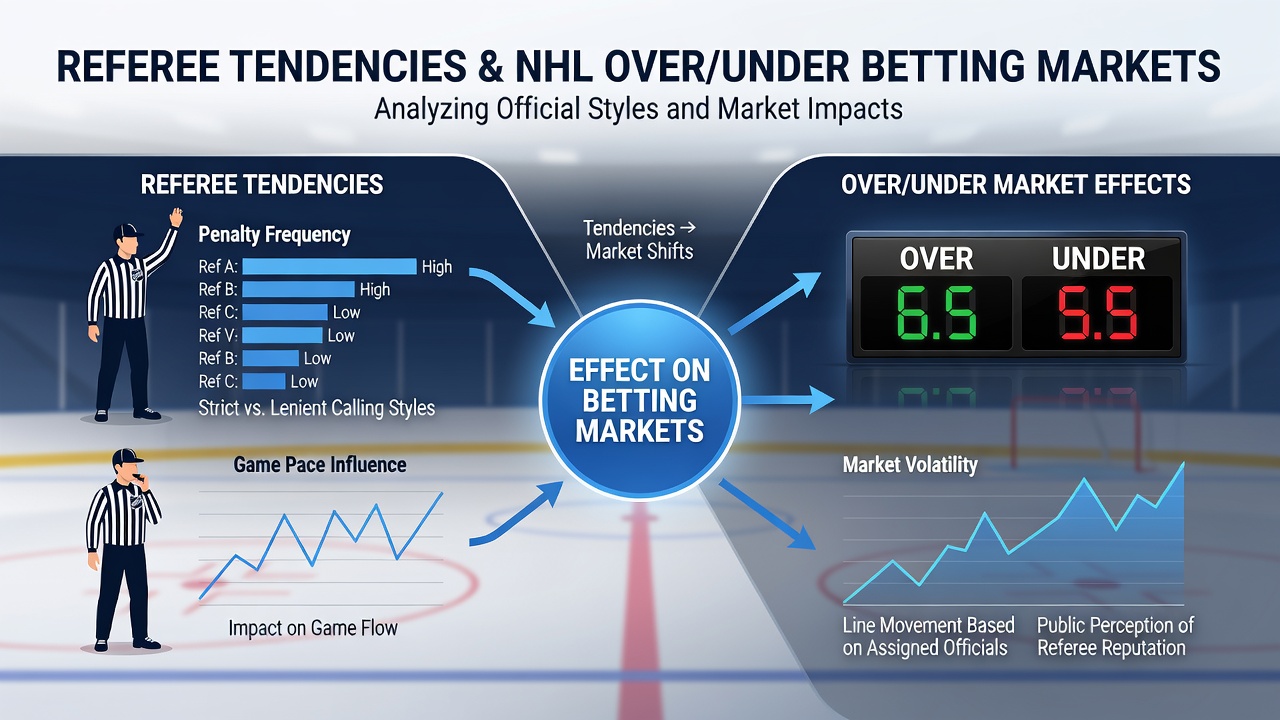
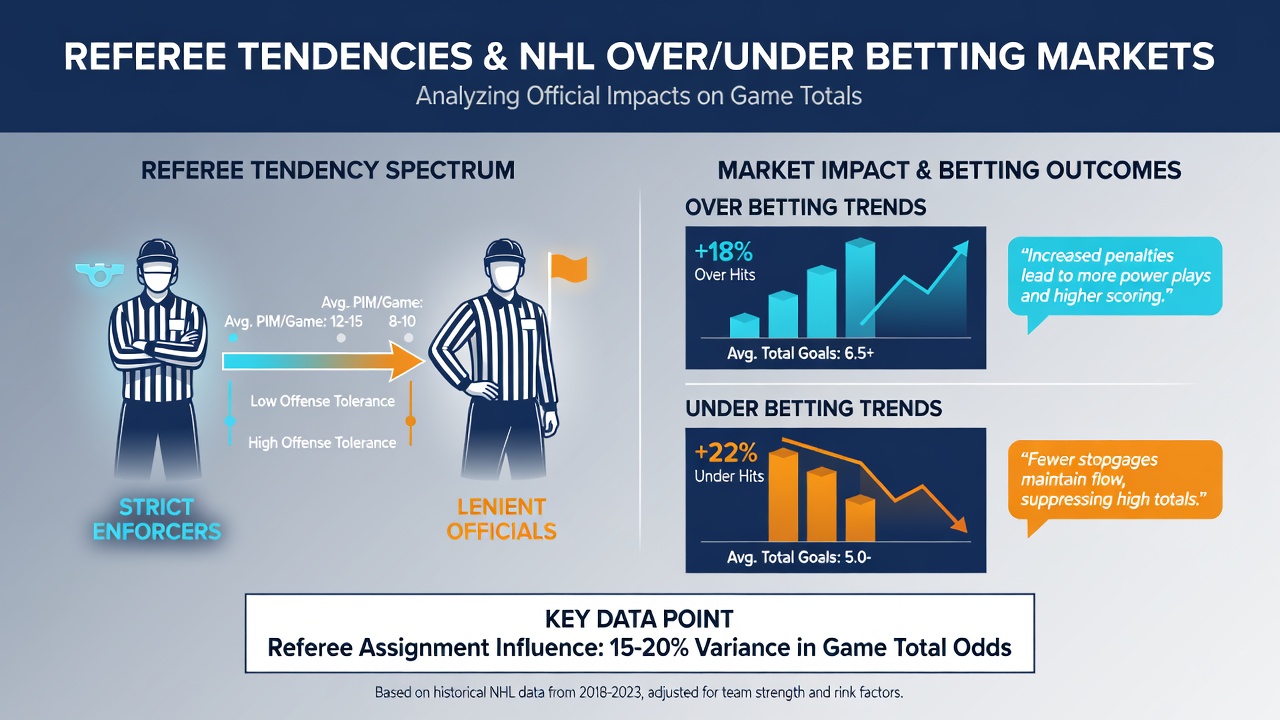
Referees in the NHL apply penalty calls at rates that vary by individual and shift across seasons, which creates measurable differences in power play frequency and overall goal production that directly affect over/under betting totals. Analysts track these patterns through official game logs and penalty minute statistics, while bettors adjust wagers based on how certain officials tend to manage physical play versus strict enforcement. Data from recent campaigns shows that some referees average more than 12 penalty minutes per game, whereas others stay below 8, and those gaps translate into extra man-advantage situations that often produce additional goals.
Penalty Call Patterns and Game Flow
Each referee brings a distinct style to the ice, and observers note that home versus road disparities appear in many cases where visiting teams receive more infractions. Studies of league-wide data indicate that referees who favor quicker whistles increase the number of power plays, which raises expected goal totals because teams convert on the man advantage at roughly 20 percent across the league. Conversely, officials who allow more physical contact without interruption reduce stoppages and keep even-strength play intact, which tends to suppress scoring. Bettors monitor these tendencies season after season because the differences compound over 82 games and into playoffs when stakes rise.
Statistical Tracking Methods
League statisticians compile referee-specific metrics that include average penalties per game, power play opportunities granted, and goal rates during those segments, and these figures become public through NHL records. Research groups then cross-reference the numbers with team shooting percentages and goaltender save rates to build models that forecast total goals under specific officiating crews. In August 2026, analysts preparing for the upcoming campaign reviewed updated referee assignments and noted several officials who had shifted their call rates after rule clarifications on slashing and cross-checking.
Impact on Over/Under Markets
Betting markets incorporate referee data into odds because sharp money moves lines when totals appear mispriced relative to expected power play volume. Sportsbooks adjust totals upward when high-penalty officials work games involving high-powered offenses, and they shade totals downward when low-call referees handle defensive-minded matchups. Historical records reveal that games overseen by the top quartile of penalty-drawing referees produce an average of 0.6 more goals than league norms, which creates edges for over bettors who identify those assignments early.
Line movement accelerates once referee information circulates because market makers respond to volume from informed bettors who specialize in totals. Teams that draw frequent penalties also benefit when paired with lenient officials, and those combinations appear regularly on schedules released each summer. Observers point out that certain divisions feature more physical styles, which amplifies the effect of referee variation and leads to wider goal distributions in divisional matchups.
Case Examples from Recent Seasons
One documented pattern emerged during the 2024-2025 season when a veteran referee averaged 14.2 penalty minutes per game across 68 assignments, and teams playing under that official posted totals over the posted line at a 54 percent clip according to aggregated betting data. Another official maintained a 7.1 penalty minute average and saw unders hit 51 percent in his games, illustrating the two-sided nature of these tendencies. Researchers at Canadian institutions have published papers examining these correlations while controlling for team strength and travel factors to isolate officiating effects.
Playoff series add another layer because referees receive assignments based on performance evaluations, and stricter officials often receive later-round games where physical play intensifies. Data from those series shows tighter call distributions that reduce variance in goal totals compared with regular season games. Bettors who follow these trends combine referee profiles with team injury reports and recent form to refine projections before lines open.
Market Efficiency and Adjustments
Over time, sportsbooks have integrated referee analytics into their pricing algorithms, yet gaps persist when assignments change late or when officials alter styles midseason. Public bettors often overlook these details, which allows sharper players to capture value in totals markets before lines fully adjust. Figures from industry reports released by North American gaming associations indicate that totals markets on high-profile games move an average of 0.5 goals once referee crews are confirmed, demonstrating the tangible influence of these variables.
Advanced tracking systems now record not only penalties but also the timing and location of calls, which provides deeper insight into how officials manage momentum shifts. Those granular datasets help modelers predict whether a given referee tends to call more penalties in the first period or during overtime situations that directly affect over/under outcomes.
Conclusion
Referee tendencies create systematic variations in NHL goal totals that influence over/under betting markets through differences in penalty frequency and power play opportunities. Comprehensive tracking of individual officials, combined with historical performance data, allows market participants to identify edges when lines fail to fully reflect those patterns. As the league continues to refine rules and evaluation processes, ongoing analysis of referee assignments remains a core component of totals betting strategy for those who study the numbers closely.